
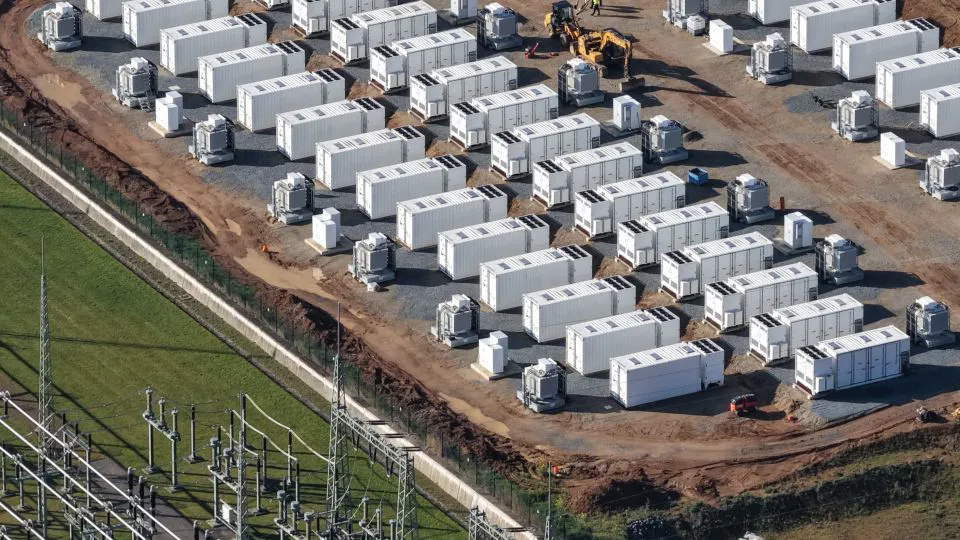

As the UK accelerates towards its Clean Power 2030 ambitions, the role of energy storage is becoming increasingly central to the future of our energy security. This storage infrastructure comes in several different shapes and sizes, all of which work towards delivering a resilient, low-carbon electricity system, and play a vital role in the UK’s energy transition.
Whilst short-duration battery storage has already proven its value in providing rapid response services and supporting day-to-day balancing, long duration energy storage (LDES) is emerging as a critical component in supporting longer-term energy security and renewable energy generation.
When mapping out future grid investment, planners and policy makers need to remember that it’s not a one size fits all solution when it comes to grid resilience. The different types of battery storage are designed to work together, particularly when addressing longer periods of low renewable output. It’s only with a delicate balance of battery technology will we truly strengthen our energy security.
The first generation of utility-scale battery projects currently in operation were deployed with a generation capacity of one to two hours, and four hours is increasingly the norm for projects being built today. In comparison, LDES is commonly seen as energy storage that has the capacity to dispatch energy for eight hours or more.
While shorter duration batteries manage daily peaks and smooth the intermittency of renewables, LDES can reliably supply electricity during extended demand peaks and step in when it hasn’t been sunny or windy for several days. It can also provide firming capacity and boost resilience during extended network stress-events.
Every form of energy storage has its part in the energy mix, allowing network operators to extract more value from their existing infrastructure and reducing pressure off the national grid. Having a varied approach to energy storage will ultimately bolster Britain’s energy security, as only with a mix of assets can we truly ensure the country has ample green energy storage for times of crisis or unusually high demand.
Beyond supporting energy security, the expansion of LDES also presents a significant economic opportunity for the UK. Investment in longer duration projects will help stimulate regional growth, create skilled jobs across engineering, construction and operations.
As global demand for energy storage technologies continues to rise, establishing a strong domestic market will position the UK as a leader in the space. By fostering expertise and attracting long-term investment, the country can unlock wider economic benefits while accelerating progress towards a cleaner, more resilient energy system.
As such, we need to strike the balance in storage technologies if we’re to reap the full benefits of them. Over-investing in one type will risk exposing flaws in our energy system, or creating obvious gaps in our ability to store and release energy over time.
The government is developing policies that will help correct any imbalances in our energy storage system and reduce our over-reliance on short duration storage. Current discussions, such as the proposed Cap & Floor mechanism designed to support the LDES rollout, will go a long way to address the imbalance and encourage developers to invest in LDES.
Historically, the significant CapEx required for LDES systems has discouraged developers, but by introducing measures like capacity payments or incentivising developers to store energy for longer durations, monetisation becomes easier, and developers will begin to pivot. These frameworks will create the right market signals for the private sector and are an important step in enabling investment in technologies that can provide system-wide resilience over extended durations.
At the same time, the opportunity for the UK lies in ensuring that the overall market design continues to support a diverse range of storage solutions. Different technologies serve different roles within the system, and their combined contribution is what ultimately delivers reliability, energy security and cost efficiency for consumers.
With multiple LDES projects currently progressing through development and bidding stages, there is a clear pipeline of opportunities to demonstrate how these assets can support the national grid alongside shorter duration projects. From shifting renewable generation across days or even weeks, to reducing reliance on peaking generation, LDES has the potential to play a meaningful role in the next phase of the energy transition.
Looking ahead, continued collaboration between industry, policymakers, and regulators will be key. By maintaining a technology-inclusive approach and enabling investment across a spectrum of storage solutions, the UK can build an energy system that is not only low carbon, but also secure, robust, flexible, and cost-effective.
Source:
https://www.theengineer.co.uk/content/opinion/balancing-uk-energy-storage-for-clean-power-2030